.jpeg)

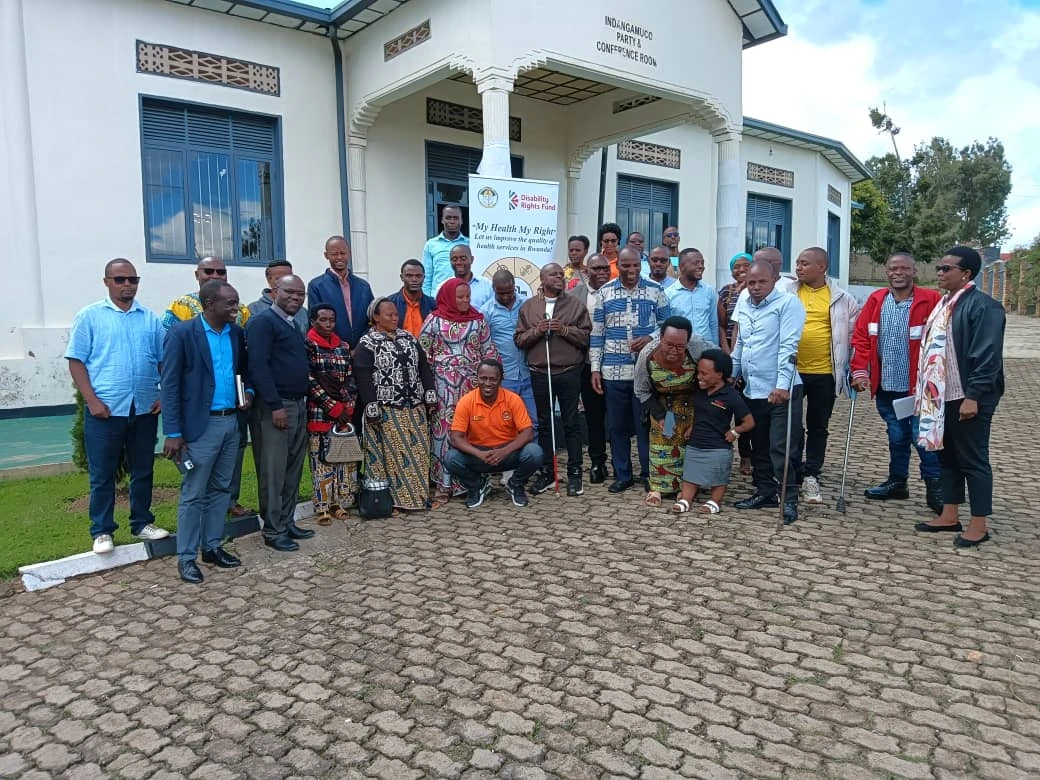
Here, we carried out advocacy for persons with disabilities in Gicumbi
-
Raising Rights Awareness and Legal Inclusion
In Gicumbi, AWF partnered with local leaders and disability organizations to advocate for the rights of persons with disabilities. These sessions emphasized Rwanda’s legal frameworks—such as the UN Convention on the Rights of Persons with Disabilities (ratified in 2008) and national law Nº 03/2011—which guarantee inclusion in education, healthcare, and social services (ncpd.gov.rw, ncpd.gov.rw). By increasing awareness among authorities and community members, the initiative reinforced that people with disabilities are full citizens entitled to equal opportunities. -
Strengthening Community-Based Advocacy Structures
Through consultation and capacity-building workshops, we supported community-based organizations and self-advocacy groups to develop action plans and conduct outreach. This included training on how to engage local government, monitor service delivery, and use media platforms to highlight challenges. Such grassroots advocacy aligns with best practices in Rwanda’s CBR (Community Based Rehabilitation) approach, which centers on empowering disabled persons within their local environments. -
Challenging Stigma and Building Inclusive Attitudes
The advocacy sessions deliberately addressed stigma and exclusion—common barriers in rural areas. Drawing on UNICEF-supported dialogue models—as seen in Kicukiro district—these events brought neighbours, parents, and youth together to break down misconceptions and foster positive attitudes toward disability inclusion (Rwanda Today, UNICEF). Testimonies from local participants confirmed that seeing peers with disabilities confidently claim their rights inspires broader community change. -
Creating Enduring Networks for Collective Impact
The effort in Gicumbi didn’t stop with a single event. Instead, AWF helped connect local disability groups with national institutions like NCPD, umbrella organizations such as UPHLS and NUDOR, and government departments. These linkages pave the way for coordinated advocacy—on issues like assistive technology, inclusive budgeting, and legal reform—as part of Rwanda’s ongoing push to mainstream disability inclusion across all sectors (International Disability Alliance, AGHR).
5,000
+
Women Trained
20
+
Community Projects
150
+
Women Accessing Microfinance
50
+
Advocacy Campaigns